

















 The Fearless Connector: Why I Chose the Hard Road
 The Clean Truth: The Clean Truth About No-Clean Flux
 Global Sourcing Spotlight: Beyond China Plus One—Building a Truly Global Supply Network





Failure Analysis after 1,000 thermal cycles
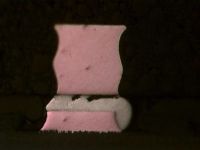
The components were cross sectioned after 1000 cycles. Minor cracks were observed for some BTC components. Cracks were typically initiated at the edge of the component at the component side. No crack was initiated at the void location.
Figure 1: Cross Section Images of BTC Component after 1000 Cycle.
Failure Analysis after 3,000 thermal cycles
The thermal cycle test was terminated after 3000 cycles. No failure was observed for the daisy chain components after 3000 cycles. Cracks were more pronounced at certain BTC components such as the QFN132, QFN52, QFN3550 and LGA1837 components. Most cracks were observed at the component side (Figure 2 and Figure 3).
Figure 2: Cross Section Images after 3000 Cycles for QFN52_ Non-Pre-tinned. Crack was usually seen at the component side.
Some cracks at the middle of the solder joint were also seen (Figure 4). Most of the cracks and the more severe cracks happened at the signal pins of the QFN components or when there was a large mismatch in pad design of the component. Thermal pads of QFNs and many LGA components with large pad sizes did not have major cracks after 3000 cycles.
Figure 3: Cross Section Images after 3000 Cycles for QFN88_ Pre-tinned Component. Cracks were seen at the component side and through the solder joint.
Figure 4: Cross Section Images of QFN Component After 3000 Cycles. Crack initiated at the solder joint, not at the void area.
Thermal Cycle Test Summary
There was no correlation between voiding amount at the thermal pad of the BTC and its solder joint thermal reliability. Crack were not initiated from the voids. There was a lack of evidence that voids in the thermal pads accelerated solder joint cracks.
BTC Thermal Modeling
In this study we evaluated the impact of solder voids in the thermal pad of the BTC. The experimentation was done by creating a BTC model and using a thermal simulator to evaluate the heat transfer to the ambient air and PCB. The model includes all single elements in a BTC like packaging mold material, copper pad frame, lead free solder, PCB and copper traces. Also, silicon dies with dimensions and power dissipation information are included. After validating the model by comparing the results with the thermal behavior from the component supplier several voiding conditions were created from 0% up to 98% voids by changing the thermal resistance of the tin based solder and reading the surface temperature of the package. Additional scenarios were created by changing the power dissipation of the package and plotting the results.
Component Selection
For thermal simulation, we used a DC to DC regulator QFN IR3837. This chip incorporates a PWM controller IC and two power Mosfets (control and synchronous FET). This device can operate at different currents and shows considerable power dissipation that facilitates the analysis of the impact of solder voiding.
Page 1 of 2


