

















 Fresh PCB Concepts: Managing PCB Trace Width and Spacing
 Elementary, Mr. Watson: The Rise and Fall of Europe's PCB Design Community
 Connect the Dots: What PCB Designers Should Know About Materials





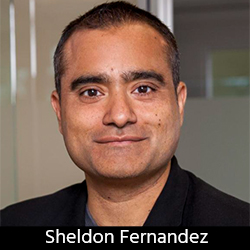
Since the advent of computers, engineers have been trying to create systems that “think” for themselves—making that leap from repeating an algorithm to actually inventing one itself. Sheldon Fernandez, CEO of DarwinAI, discusses the difference between true artificial intelligence and machine learning (ML), and whether we can trust what AI gives us. Is AI only as good as the training it’s given by a human?
Andy Shaughnessy: Sheldon, what's the cutoff between AI and ML? How do we know?
Sheldon Fernandez: In the 1950s, the original definition of AI was in asking how to get an artificial entity—something that's not human—to exhibit behavior that we would classify as intelligent. Could it play chess or solve a mathematical equation on its own? It was a general term which the original AI practitioners had. As the AI got more sophisticated, people said those type of questions about chess or mathematics weren’t AI because the program wasn’t really “thinking.”
For example, when IBM’s Deep Blue beat Garry Kasparov in chess in 1997, people said, “Well, it may be better than the best human, but it doesn't know that it’s playing chess. It doesn't even know what chess is. It’s just realizing an algorithm.” Now, things are more sophisticated, and it depends on who you're talking to. People in my field wouldn't consider pattern matching or expert systems to be the artificial intelligence we are typically talking about with second- or third-wave machine learning, deep learning, and such. What’s the cutoff between these techniques and true artificial intelligence? There's something called artificial general intelligence (AGI)—AI doesn't have to be trained or taught about a task but can solve it anyway.
With ChatGPT, for example, in these very large language models, it’s seeing scenarios that it's never seen before and can problem solve against them. A recent research paper from Microsoft makes the argument that you're seeing the glimmers of AGI in the system. Some would say that's the cutoff point, but it's a nebulous term right now.
Nolan Johnson: In an interview with Brad Griffin at Cadence Design Systems, he said they’re looking at creating simulation parameters for optimization. Data shows that while a human might put together five or six different scenarios to simulate for fault and signal integrity, the AI generates a couple of dozen additional parameters. At that point, it looks more like basic problem solving. How do we get to a solution?
Fernandez: Think about imagination or creativity; AI thus far can be creative in a derivative sense. You provide it with a theme or boundaries, and it will give you a creative artifact in that genre or within those boundaries. The question that philosophers and practitioners will ask is something called meta creativity: Can AI make an intuitive leap and come up with something new altogether? Einstein came up with the general theory of relativity; Picasso created a form of art called Cubism. Will AI ever do that? Can it look at what you’re doing, tell you that your design isn’t efficient enough, and then come up with something completely new, a design that hasn’t been thought of yet?
To read this entire article, which appeared in the August 2023 issue of Design007 Magazine, click here.


