














 The Marketing Minute: Marketing Is a Team Sport
 The Right Approach: Old Philosophies, New Tools
 Trouble in Your Tank: HDI and UHDI—Building the Foundation of Advanced Packaging





Latest Articles
IPC’s PCB Tech Trends Study Highlights Issues Impacting Fabricators

The 2018 survey results indicated the need for speed and low loss as critical functions of the materials chosen. This is the digital age, and with the Internet of Things, virtual and augmented reality, vehicle-to-vehicle communication, etc., the need for low-loss and ultra-low-loss materials continues to grow as a percentage of circuit boards fabricated.
DuPont on Materials Challenges and New Opportunities

John Andresakis, senior marketing technologist in the Interconnect Solutions (ICS) Group of DuPont, and Jonathan Weldon, RF applications engineer also in ICS at DuPont, spoke with the I-Connect007 editorial team about trends the company is seeing, what challenges their customers are facing with materials today, and future opportunities with new technologies, including 5G, electric cars, IoT, and more.
Words of Advice: Planning a New Design

In a recent survey, we asked the following question: What do you think is the most important thing a designer should remember when planning a new PCB design? Here are a few of the answers, edited slightly for clarity.
Creating Stability in Materials Chaos

Nolan Johnson and Tony Senese—manager, business development group, Panasonic EMBD—discuss the evolution of the materials marketplace over the years from a time when the market aligned for the rise of Panasonic’s MEGTRON 6 to the ever-changing materials industry of today. With the ramp-up to 5G and everyone pushing product development, Tony describes a chaotic materials market flooded with new companies and materials.
PCB Fabricators’ Tech Capabilities Exceed OEMs’ Needs in Many Areas

Some interesting differences showed up in the board property data reported by the OEMs and PCB fabricators that participated in IPC’s PCB Technology Trends 2018 study.
Laminate Suppliers Face Increasing Demands From Customers

As a global laminate supplier with a large product offering, TUC is at the forefront of the growing customer demands that stem from a number of market segments pushing next-generation products. In an interview with Nolan Johnson, TUC North American President Alan Cochrane talks about the company’s shift toward trending areas and how strategies like the adoption of thinner glass styles have helped make it all possible.
The GraftWorx Fluid Management Patch Story
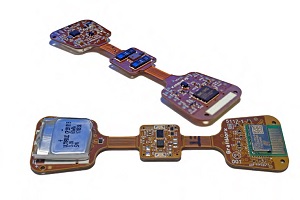
The GraftWorx vision is to connect patients to clinicians with clinical data that will have a meaningful impact on their care. Its first application is to monitor patients with end-stage renal disease or kidney failure using a wearable device called the SmartPatch that records numerous clinical cardiovascular metrics. This article details how GraftWorx was designed, fabricated, and assembled.
Orbotech Celebrates Success of Orbotech Diamond and Discusses Future Trends
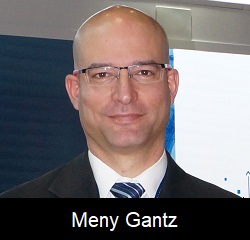
At the recent CPCA Show in Shanghai, Orbotech celebrated having over 100 of their Orbotech Diamond™ direct imaging machines in the marketplace. Barry Matties caught up with Meny Gantz—VP of marketing for Orbotech’s PCB division—to talk about the drivers behind the success of Orbotech Diamond systems before turning the conversation toward the future and Industry 4.0.
Words of Advice: What Feature Would You Like to See in Your CAD Tool?
In a recent survey, we asked the following question: What feature would you like to see in your CAD tool? Here are a few of the answers, edited slightly for clarity.
IMPACT Washington, D.C. 2019 Recap: Leaders Call for Action on USMCA Trade Deal
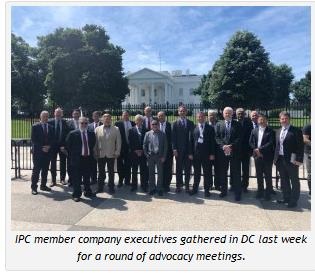
Top executives from electronics companies across the United States were in Washington, D.C., last week to call on the Trump administration and Congress to support policies that will drive the electronics industry’s future growth in North America and worldwide.
Isola on Adapting Processes to Meet Customer Needs

In an interview with I-Connect007, Sean Mirshafiei, chief sales and marketing officer for Isola, discusses the company’s perspective on material market trends and how they are adapting product development processes to respond to new customer needs.
Collaboratively Creating Wearable Medical Products
Patty Goldman, Barry Matties, and Happy Holden recently spoke with David Moody and Rich Clemente of Lenthor Engineering along with Anthony Flattery and Amit Rushi—their customers at GraftWorx. They discussed a recent project and how they worked together to solve a difficult problem by designing a rigidized flex circuit for their product.
Electrolytic Plating: Filling Vias and Through-holes

The continuously evolving electronics industry environment is causing the development of various electrolytic copper processes for different applications over the past several decades. This article describes the reasons for development and a roadmap of dimensions for copper-filled through-holes, microvias, and other copper-plated structures on PCBs.
FlexFactor Program Informs, Inspires, Attracts, and Recruits Talent

Barry Matties and Nolan Johnson speak with Brynt Parmeter, Emily McGrath, Clarence Chi, and Mikayla Ridi about the NextFlex program FlexFactor. This initiative aims to help high school and college students see potential futures in the advanced manufacturing sector and combat common misperceptions young people might have about modern-day manufacturing.
Are Regional Differences in PCB Technology as Great as We Think?
We keep hearing that Asia is all consumer and automotive electronics and North America and Europe are all high reliability/long life. The findings in IPC’s PCB Technology Trends 2018 study show that these regions are not as different as expected, and the differences we do see are interesting.
Barbara Bracken Discusses ICAPE's New Facility

During the recent SMTA Atlanta show, Andy Shaughnessy sat down for an interview with Barbara Bracken, sales manager for Texas for the ICAPE Group. Barbara explained why ICAPE is much more than a PCB broker; the company now owns its own assembly facility in the U.S. and can assembly boards in the U.S. or China.
Growing Opportunities with 3D Printed Electronics
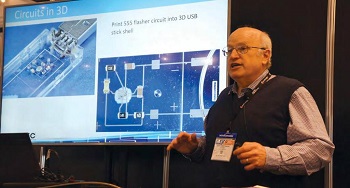
Dr. Kurt Christenson, senior scientist at Optomec, discusses the company’s Aerosol Jet technology, which eliminates the need for wire bonding by printing interconnects on 3D surfaces. Christenson also explores the current state of the technology and highlights the market segments and applications with the most to benefit from being able 3D print electronic components, such as resistors, capacitors, antennas, and transistors.
DuPont on New Beginnings and Empowering the Industry

Andy Kannurpatti gives the I-Connect007 team an overview of the latest news from DuPont Electronics and Imaging, including investments toward the new production assets in Ohio, Silicon Valley Technology Center, and other facilities. He also details how the company is engaging OEMs and PCB fabricators and design teams, as well as some exciting business updates coming this spring and summer.
Making Materials Succeed: Past, Present, and Future Trends
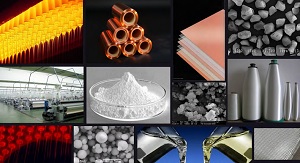
Tony Senese, manager for the business development group at Panasonic EMBD, gives Nolan Johnson an overview of materials and components as well as changing business models and methods to make materials succeed and how to stay profitable.
Alun Morgan on the Future of PCB Materials

The I-Connect007 editorial team asked Alun Morgan, technology ambassador for Ventec International Group, to discuss materials at a high level. Our conversation delivered a detailed overview of the current state of the electronics industry.
Words of Advice: Your Company’s Design Process
In a recent survey, we asked PCB designers to describe their company’s design process: Is it a rigid workflow they follow to the letter, or a process that allows for their individual techniques? Of course, the comments were illustrative. Only one respondent said, "We just wing it."
XNC Format: Gerber Takes Data Into the Future

The problem is that so many NC files are of deplorable quality because the NC format was never designed as a data transfer format. It has always been a machine driver and contains all sorts of information that a drilling machine needs, but that is irrelevant and confusing for data exchange.
Learning to Be More Flexible: Case Studies on Improving FPC Design

As miniaturization requirements force manufacturers to pack more functionality into ever-smaller packages, it becomes more difficult to conform to IPC construction recommendations. Achieving robust FPCs requires frequent, iterative interaction internally among the mechanical, electrical, and PCB design teams, as well as with the fabricators and assemblers. The sooner in the design cycle you can engage the supplier and assembler, the better.
New Technical Director and Upcoming 2019 EIPC Summer Conference
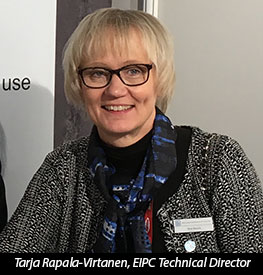
Tarja Rapala-Virtanen is the newest technical director for the EIPC. I-Connect007's Nolan Johnson and long-time EIPC conference attendee Pete Starkey discuss her new role, the upcoming summer conference in Leoben, Austria, and the program in place for the June conference.
Vertical Conductive Structures, Part 1: Rethinking Sequential Lamination

Sequential lamination, as it is used today in high density interconnect (HDI) and derivative technologies, is constrained by the fact that one cannot plate a blind hole deeper than the diameter of the hole. A larger hole allows processes to plate deeper. In fact, this manufacturing constraint has made it a challenge even to reliably plate and process blind holes up to a 1:1 aspect ratio.
Copyright © I-Connect007 | IPC Publishing Group Inc. All rights reserved.
Log in