

















 The Marketing Minute: Marketing Is a Team Sport
 The Right Approach: Old Philosophies, New Tools
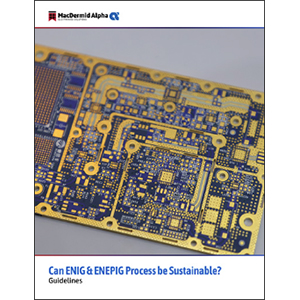
 Trouble in Your Tank: HDI and UHDI—Building the Foundation of Advanced Packaging





Latest Articles
Names to Know: Up and Comers in U.S. Congress

When major news occurs in the U.S. Congress, you usually hear the names of top congressional leaders such as House Speaker Nancy Pelosi (D-CA) or Senate Majority Leader Mitch McConnell (R-KY).
Meet Chris Mitchell, I-Connect007 Columnist

Chris Mitchell is vice president for global government affairs at IPC—Association Connecting Electronics Industries—where he is responsible for development and implementation of the organization’s global advocacy efforts and public policy agenda with a focus on electronics industry business improvement, environment, health and safety, and defense initiatives.
Words of Advice: Planning a New Design

In a recent survey, we asked the following question: What do you think is the most important thing a designer should remember when planning a new PCB design? Here are a few of the answers, edited slightly for clarity.
The Impact of Inductance on Impedance of Decoupling Capacitors

This article discusses the impact of interconnection inductance on the impedance of the decoupling capacitor, which influences the power integrity of the PCB. The investigation is performed with 3DEM simulation by varying the trace length and height of stitching vias that connect the decoupling capacitor across the power rail and ground.
Altium Designer 19.0 Features Printed Electronics Design Functions

The newest version of Altium Designer—revision 19.0—includes functionality for designing printed electronic circuits. We wanted to get the scoop on Altium’s PEC tools, so we asked Nikolay Ponomarenko, Altium’s director of product management, to give us a tour of the new functions.
IPC Reliability Forum Wrap-up With Brook Sandy-Smith

I attended the recent IPC High-Reliability Forum and Microvia Summit in Baltimore, Maryland. The speakers and panelists focused on a variety of topics, but one issue that kept popping up was the failure of some microvias on military and aerospace PCBs. Fortunately, some smart technologists are focusing on determining the cause of these via failures. I asked Brook Sandy-Smith, IPC’s technical education program manager, to give us a quick wrap-up of this event.
Denny Fritz: The Difference Between Quality and Reliability

I recently spoke with industry veteran (and I-Connect007 columnist) Denny Fritz about the relationship between quality and reliability—two terms that are unequal but often used interchangeably. We also discuss the current state of lead-free solders in the U.S. military and defense market as well as the microvia reliability issues Denny focused on at IPC’s High-Reliability Forum and Microvia Summit in Baltimore, Maryland.
IPC High-reliability Forum and Microvia Summit Review, Part II

The Microvia Summit on May 16 was a special feature of the 2019 event in Baltimore, since microvia challenges and reliability issues have become of great concern to the PCB manufacturing industry. It provided updates on the work of members of the IPC V-TSL-MVIA Weak Interface Microvia Failures Technology Solutions Subcommittee and opportunities to learn about latest developments in methods to reveal and explain the presence of latent defects, identify causes and cures, and be able to consistently and confidently supply reliable products.
Mentor Tools: Optimized for Flex and Rigid-flex Design

With the launch of the new Flex007 section in Design007 Magazine, we asked David Wiens, product marketing manager with Mentor, a Siemens Business, to tell us about their tools’ flex and rigid-flex design capabilities. As David explains, today’s higher-end design software tools are optimized for flex design, making workarounds a thing of the past.
How to Feed Test Data Back to Engineering for Process Improvement

Some people think of the PCB manufacturing process as a black box: design data goes to the manufacturer (fabrication house), and magically, the finished PCB is produced. While it may have been like that in the past, in actuality, fabricating PCBs today is quite a ballet of processes.
Interconnect Reliability Correlation With System Design and Transportation Stress
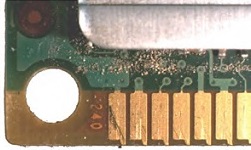
Interconnect reliability is very critical to ensure product performance at predefined shipping conditions and user environments. Plating thickness of the compliant pin and the damping mechanism of electronic system design are key success factors for this purpose. This paper discusses design variables—such as pin hard gold plating thickness, motherboard locking mechanism, and damping structure design—to ensure interconnect reliability.
Focusing on Surface Sensitivity for Reliability

At the recent IPC High-Reliability Forum and Microvia Summit, Customer Applications Scientist Elizabeth Kidd and Sales Engineer Alex Bien, both of BTG Labs, discuss with Andy Shaughnessy their presentation on the challenges of working with highly sensitive surfaces, such as the risk of contamination. They also talked about the various surface characterization techniques that BTG Labs uses to identify such contaminants.
IPC High-reliability Forum and Microvia Summit Review, Part I
The IPC High-Reliability Forum and Microvia Summit covered a broad range of topics related to reliability and provided interactive opportunities to share expert knowledge and experience in determining and understanding the causes of failure and selecting the best design rules, materials, processes, and test methods to maximise product reliability.
Crowded Congressional Calendar Affects Industry Priorities
More than five months remain in 2019, but U.S. congressional leaders are already running out of time as they face a long list of must-pass bills before year’s end. Although some of these bills do not affect the electronics industry, some of them do, and the overall agenda does affect the opportunities and risks we face.
A Guide to High-reliability PCBs from Design to Specification
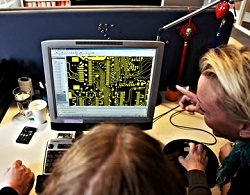
Creating reliable PCBs is an outcome of considering all aspects that can affect reliability as early as possible in the design process. The further down the design process, the more expensive and risky it can be to fix. As they say, everything starts with the design. Because a good board design improves the reliability of the end product and lessens the risk of failure.
A Conversation with Karen McConnell—An Emerging Engineer Program Mentor

IPC’s Emerging Engineer program, launched in 2016, provides early career professionals an opportunity to learn from dedicated industry volunteers who participate in IPC standards development. IPC’s editorial staff had the opportunity to talk with one of those dedicated volunteers, mentor Karen McConnell, Senior Staff Engineer CAD CAM, Northrop Grumman, about why she participates as a mentor in IPC’s Emerging Engineer program.
How Changing Cleaning Technologies Affect Reliability

At the recent IPC High-Reliability Forum and Microvia Summit, Andy Shaughnessy spoke with Michael Konrad, founder and president of Aqueous Technologies and a speaker and panelist at the event in Baltimore, Maryland. They discussed Konrad’s presentation and the recent proliferation of cleaning, from solely high-reliability products to Class 1 consumer products.
Nano Dimension CEO Gives Company Update

Dan Feinberg and Nolan Johnson speak with Amit Dror, CEO of Nano Dimension, about recent company events and the company’s focus on high-mix/low-volume and agile local manufacturing.
Words of Advice: Where Do You Get Involved in the Design Process?
In a recent survey, we asked the following question: Where in the process do you typically get involved with a design project? Here are a few of the answers, edited slightly for clarity.
EPA, Industry Come Together in Visit to TTM Facility
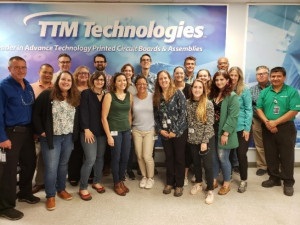
IPC member TTM Technologies is proud to show off the new wastewater-treatment system at its Sterling, Virginia plant, which is helping to enhance the company’s pollution prevention and resource recovery performance.
Microvias: Links of Faith are Not Created Equally

Microvias connect adjacent copper layers to complete electrical paths. There are copper-filled microvias, which can be stacked to form connections beyond adjacent copper layers, and staggered microvias, which stitch adjacent copper layers with paths that meander on the layers between the microvias. This article discusses the various laser-drilled microvias and presents SEM photographs to begin the search for the root cause of weak copper interface.
Reliability... It All Comes Down to the Landing

Our industry is embarking on a new age of technical development to achieve much higher levels of overall reliability that will be required of the devices we fabricate. Whether in medical devices, autonomous vehicles, or in IoT, reliability will be crucial to both our success and safety.
Dissecting the IPC Regional Survey on PCB Technology Trends

Sharon Starr, Denny Fritz, and Mike Carano talk about the global 2018 IPC Technology Trends Report released early this year—the size of the survey, how it was conducted, the general findings, and regional differences. They also shared their takeaways and regional insights, and the industry outlook over the next five to 10 years.
An Examination of Glass-fiber and Epoxy Interface Degradation in Printed Circuit Boards
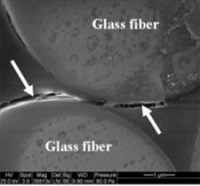
Multilayer organic laminates, which make up over 90% of the interconnecting substrates in electronics (standard FR-4 represents 85% of the substrates used for laminates), can develop a loss of electrical insulation resistance between two biased conductors due to conductive filament formation.
Identifying Product Board Class and Pre-quote Software

Deciding on the class of the final product will determine what files are needed for fabrication and assembly. It is critical to note that for a product to be built to any class level, it must be designed to that class level from its inception.
Copyright © I-Connect007 | IPC Publishing Group Inc. All rights reserved.
Log in