












 It’s Only Common Sense: AI Makes Preparation Easier and Excuses Harder
 Happy’s Tech Talk #50: Start Your Digitalization Strategy With Automation
 The Chemical Connection: A Few Things That Still Scare Me






Latest Articles
UK PCB Industry Leader Brian Haken Passes Away

Brian Haken helped steer the UK PCB industry to wider markets, forging close ties with the IPC in the United States and JPCA in Japan.
Institute of Circuit Technology 41st Annual Symposium

ICT Technical Director Bill Wilkie has always excelled in locating interesting and unusual venues for the Institute of Circuit Technology Annual Symposium, and this year was no exception. For the 2015 event, the 41st, he chose the Black Country Living Museum, an open-air museum of rebuilt historic buildings in Dudley, in the West Midlands of England, home of the original Industrial Revolution.
Flexible and Stretchable Circuit Technologies for Space Applications
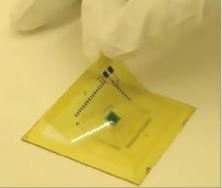
This article describes two original technologies developed at imec-CMST--the ultra-thin chip package (UTCP) and stretchable moulded interconnect (SMI)--and how they could be offering new form factors with increased functional density, as well as improved reliability in harsh environments .
The Composite Properties of Rigid vs. Multilayer PCBs

Most materials systems used in PWBs (aka PCBs) are composites of resins, fabric substrates and metal cladding. Each of these components has its own unique electrical and mechanical properties that contribute to the final characteristics of the finished laminates, prepregs and fabricated multilayer boards (MLBs). In most cases variables such as glass style and resin content have offsetting impacts on physical vs. electrical properties. Chet Guiles explains.
Revolutionizing Equipment Repair & Service

Guest Editor Steve Williams sits down with Randy Cook of CalTeks and Yash Sutariya of Alpha Circuits to talk about servicing equipment, especially foreign equipment not previously available in North America. With quality service now readily available, one can take advantage of considerably less expensive equipment being manufactured in China.
How to Make Mass Lam Outsourcing Successful

For PCB manufacturers in the United States and Europe, finding a suitable mass lam-outsourcing partner can be a challenge. In this interview with Option Technologies, a Ventec International Group company, I-Connect007 Technical Editor Pete Starkey and Option Managing Director Steve Law discuss the ins and outs of this specialist market.
Novel High-Performance Substrate for Stretchable Electronics

A cornerstone feature of any viable stretchable material is its ability to return to zero after stretching. This article talks about a new transparent, high-performance thermal setting stretchable material that could open doors to a range of new and innovative products.
Wearable Technology and Flexible Circuits

Flexible circuits are an ideal fit for wearable technology. Wearable electronics need to be light, dense and bendable. While what is currently considered standard flexible circuit technology is more than adequate for many the wearable products, there are requirements that may be pushing the boundaries a bit.
American Standard Circuits’ Unique Offerings Contribute to Long-term Success

At the recent IMS RF and microwave show in Phoenix, Arizona, Anaya Vardya, CEO of American Standard Circuits, sat down with I-Connect007's Barry Matties to discuss the current market trends, the company's recent equipment investments, and where American Standard Circuits' growth will likely come from.
A New Source for Laser Drills

Publisher Barry Matties recently visited the West Coast offices of Nano System Inc. to catch up with Sam Sekine, formerly of Hitachi. Nano System is a new company focused on producing and selling laser drill systems to the PCB industry. In this interview, Mr. Sekine discusses his staff, the company’s technology, and Nano System’s strategy for the future.
A High-Reliability, Stress-free Copper Deposit for FPC, Polyimide and Rigid-Flex

Conventional electroless copper systems often required pretreatments with hazardous chemicals or have a small process window to achieve a uniform coverage without blistering. To overcome the challenge of metallizing smooth surfaces, a new stress-free electroless copper was developed to serve this important sector of the printed circuit industry.
Flexible Circuit Materials for High-Temperature Applications

To meet the increasing needs for flexible circuit materials for high-temperature applications, new test methods will need to be developed. These new methods will assign new ratings that are consistent with actual performance.
New Embedded Component Standard Finalized

Solberg Technical Consulting's Vern Solberg talks to I-Connect007 about the recently launched standard, the IPC-7092, which focuses on embedded component technology. According to Solberg, this new standard took the earlier standards involved with passive devices, and combined it with standards on newer technologies using active devices, to help form components that can be manufactured and placed on layers within the PCB.
HDPUG Demonstrates Benefits of Cooperative R&D
The High Density Packaging User Group (HDPUG) is a member-driven, non-profit, project-oriented industry consortium that addresses the integration of new electronics component packaging and interconnection technologies into the supply chains of its member companies.
How to Successfully Purchase PCBs

How do you go about purchasing reliable and durable PCBs at the lowest possible cost? A key success factor is to provide the prospective suppliers with accurate and clear specifications, and to keep a close eye on the quality of the boards once they are in production.
eSurface Breaking Down Barriers for Murrietta

Murrietta Circuits is the first facility in North America successfully processing PCBs made with the eSurface technology. Andy Murrietta talks with Guest Editor Judy Warner about the key benefits, including greatly improved line geometry, trace tolerance, and peel strength.
HDPUG and High-Frequency Test Methodologies

CEO Brian Butler talks with Guest Editor Bob Neves about the HDP User Group, an industry consortium that is developing test methodologies and programs. Brian decribes three of the current subcommittees: Material Characterization; Back Drill, having to do with defect detection and reliability; and Copper Surface Roughness.
Electroplating Through-Holes with Different Geometry: A Novel and High-Productivity Process

Microfill through-hole fill electrolytic copper is a new process designed to offer outstanding through-hole fill, particularly for substrates intended for use as core layers in build–up applications, producing planar, solid copper plugs in high-volume production plating equipment. This article describes a novel copper through-hole fill electroplating process designed for use with insoluble anodes and direct current (DC) rectification.
The Flex-to-Fit Approach

The flex-to-fit concept reminds us that creativity and engineering go hand-in-hand. When there is not ample space for a conventional approach, this process, which is the convergence of the mechanical world and the electronics world, results in the ability to design a flexible circuit along the contour of an existing, irregularly shaped structure.
Flexible, Stretchable, and Wearable: If You Can Dream it, You Can Create it!

We originally intended the June issue of The PCB Magazine to be centered on flexible circuits, but it quickly became apparent that we needed to broaden the scope and include all (well, at least some) of the new and exciting things going on these days in the world of flexible everything. As such, we have garnered a trove of authors, with much information to impart on the above mentioned.
Optimization of Acid Copper Electrodeposition Processes for High-Throwing Power DC Plating
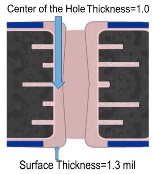
One of the three most fundamental aspects of printed circuit fabrication is the metallization and electroplating of throughhole vias and blind via interconnections. In this article, Michael Carano writes about the strategies in optimizing acid copper electrodeposition processes for high-throwing power DC plating.
ENEPIG: The Plating Process

In this article, George Milad talks about the complexity of the ENEPIG process, how it works, its requirements and the critical parameters that must be maintained in the ENEPIG line. He writes that shops that have good engineering and documentation of the manufacturing process, coupled with a dedicated, experienced ENEPIG operator that is backed by a capable analytical laboratory, run defect-free ENEPIG day in and day out.
Precision Back-drilling High-Speed PCBs? No Problem!

Grant Christiansen of Schmoll Maschinen discusses the latest developments for high-speed back-drilling, particularly for the North American market. He stresses the importance of both software and machine capability, along with working closely with the customer.
Polar Talks Impedance and Insertion Loss Testing

Product Specialists Michael Bode and Geoffrey Hazlett join Guest Editor Dan Feinberg to talk about controlled impedance and insertion loss testing.
NEPCON China 2015 a Resounding Success in Shanghai

The three-day event was a complete success, bringing together nearly 22,000 trade visitors and high-quality buyers, as well as 450 leading brand names from 22 countries and regions worldwide. NEPCON China keeps up with market trends and gathers resources from all stakeholders to present a comprehensive event that covers SMT, new electronics materials, soldering, dispensing, electronics automation, measurement and other innovative technologies and products across the world.
Copyright © I-Connect007 | IPC Publishing Group Inc. All rights reserved.
Log in