















 Marcy’s Musings: A Frighteningly Good October Issue
 It’s Only Common Sense: Win the Sale Before the RFQ Arrives
 The Marketing Minute: Marketing Is a Team Sport






Latest Articles
Tech Trajectories: Projecting Trend Advancements

Reflecting on technological advancements and examining how foundational technology trends evolve is essential to seeing where the world and society are headed. Last year, significant strides were made in data governance, automation, edge computing, artificial intelligence (AI), and the metaverse. IEEE Standards Association (IEEE SA) is keeping its eye on what’s ahead for these technologies that are transforming various industry sectors. In this article, I’ll examine the current state of these technologies and outline the advancements and directions we expect ahead.
Data-driven Industrial Digital Solutions Drive Quality and Reduce Costs

Data-driven digital solutions for decision support, process optimization, and operational efficiency have emerged as essential elements for the PCB manufacturing industry, leveraging technologies such as IIoT (Industrial Internet of Things), machine learning (ML), and artificial intelligence (AI) to provide real-time insights into equipment health and performance in the first place. In the following article, we will explore the importance and impact of data-driven solutions on industrial operations.
I-Connect007 Editor’s Choice: Five Must-Reads for the Week

It’s been a busy week in the world of PCB design and manufacturing. In this week’s roundup, there’s a little bit of everything. We have a look at PCB technology of tomorrow, an interview with an engineer who designs both PCBs and ICs, and government relations news from Washington, D.C. We also have an article on dispensing technology, and a final installment of our podcast on “designing for reality.”
Understanding Cleaning Challenges for Automated Solder Paste Dispensing

In today’s rapidly evolving electronics manufacturing landscape, staying abreast of innovative technologies is crucial. As solder paste and substrate materials continually evolve and become more complex, optimizing production methods with the latest technology ensures performance and quality while reducing operational costs.
Global Perspectives: The Future of PCB Technology

It has been a while since we talked to a multi-company Asian-based PCB fabricator. Based on the markets served, Asia-based fabricators already utilize the highest-tech PCB processing equipment and materials. Where does that leave the rest of the world? Joe Dickson, an executive at Wus in China, candidly shares his observations, experiences, and perspective of an American working for an Asian-based PCB fabricator, envisioning a realistic future for the PCB fabrication industry.
I-Connect007 Editor’s Choice: Five Must-Reads for the Week
At the top of my list is “Silicon to Systems,” an interview with technology experts from IPC: Matt Kelly, Devan Iyer, and Kris Moyer. Also, this week, we hear from I-Connect007 Managing Editor Nolan Johnson, who’s been in Mexico for SMTA Guadalajara. Speaking of Mexico, I want to highlight an interview that appeared in IPC Community between Lorena Villanueva and Barjouth Aguilar of Flex, who talk about the importance of sustainability. I wrap up my recommendations with articles about solder printing and wet process control.
Grow, Pause, Grow: A Report From SMTA Guadalajara
Two years ago, the EMS industry in Mexico—spurred by the EV and medical markets, and accelerated by changing trade relations with China—was growing by leaps and bounds. In fact, recently, SMT007 Magazine reported on the near-shoring effects. This week’s SMTA Guadalajara Expo and Tech Forum reflects that growth through the show’s rapid expansion and high-energy enthusiasm.
A Parametric Approach to the Environmental Impact of PCB Fabrication

Sustainability for electronics is receiving more attention due to environmental concerns, regulatory obligations, and to ensure competitiveness in a growing market for sustainable products. To facilitate the discussion on the environmental impact of electronics, there is a strong need for data on energy use, carbon footprint, greenhouse gas (GHG) emissions, hazardous chemicals used during manufacturing, waste generation, etc.
I-Connect007 Editor's Choice: Five Must-Reads for the Week
This week’s Top 5 starts with steps you can take to cultivate a culture of thriving. We also have bullish news from the global semiconductor sector, advice on how to tease out hidden cost drivers during the PCB design cycle, how the Altium-Ansys collaboration will affect design, and Happy Holden’s version of Occam’s Razor—three simple tools to keep your wet processes in line.
Automation Innovations and Better Process Control

Mark Skaer specializes in automation at Omron. In this interview, he sheds light on the challenges and solutions integrating sophisticated automation technologies in various manufacturing settings by emphasizing the importance of understanding customer needs to tailor effective solutions. With a rich background in electrical engineering, Mark plays a pivotal role in showcasing Omron’s state-of-the-art automation capabilities through trade shows and technical demonstrations.
Young Professionals Spotlight: Process Engineer Kevin Dial, American Standard Circuits

When I heard that my friends at American Standard Circuits had hired a new, fresh-out-of-college process engineer, I was anxious to meet him. Now, you get to read this interview. It’s a rare perspective of a young man new to our industry.
Opportunity Knocks

IPC member DETEX Corporation of New Braunfels, Texas, like so many similar companies, strives to cultivate a highly skilled workforce to meet the growing demand for electronics assembly professionals. But also like many companies, DETEX, which engineers and manufactures security products, has struggled to hire qualified workers. Most employees are hired without certification or experience. Providing on-the-job training (OJT) without technical instruction has been met with limited success.
Audits: A Critical Element of Process Control

A formal audit always seems difficult to justify. Companies do not want the expense, and employees do not want the hassle. There is always a chance of failure, and management struggles to understand the benefits. If you or your company has had issues with auditing, hopefully, this article will help you feel a little more comfortable about the auditing process.
I-Connect007 Editor's Choice: Five Must-Reads for the Week
There’s a lot going on in our industry right now. As you’ll see in today’s must-reads, there’s even innovation taking place in drill bit development. We also have articles on cutting costs during the design process, as well as a handy guide to each country’s tech sweet spots, and what it takes to thrive in this segment. Don’t miss our ode to the CAM department, which is where the rubber meets the road for every PCB.
In Honor of the U.S. Labor Day

Sept. 2, is Labor Day in the United States, always observed the first Monday in September. In its official declaration, we learn that “Labor Day is an annual celebration of the social and economic achievements of American workers. The holiday is rooted in the late 19th century when labor activists pushed for a federal holiday to recognize the many contributions workers have made to America’s strength, prosperity, and well-being.”
Advancements in Drill Bit Technology

In this interview with Alex Girardot of Perfect Point Precision Carbide Tools, we explore the pioneering advancements in drill bit technology supporting high-tech fabrication. Alex leverages his 15 years of expertise in the PCB industry to discuss the critical role of coating technology in enhancing drill bit performance. This technological leap increases accuracy, especially in high aspect ratio builds, and nearly eliminates drill bit breakage.
Give Yourself an Edge at the IPC High Reliability Forum 2024

For those who support military and defense products, few topics are more important than reliability, particularly as we venture into complex packaging requirements that accommodate next-gen chips and electronic systems. Recently, I visited with Teresa Rowe, IPC senior director, assembly and standards technology, to discuss the IPC High Reliability Forum (HRF), Oct. 9-10, at the McKimmon Center, in Raleigh, North Carolina. With topics that cover high-voltage electronics, standardized test methods, and assembly and solder joint X-ray challenges, it is clear that this event needs to be included on your annual conference calendar.
Shifting to Automated Chemical Dosing for Enhanced Control and Safety
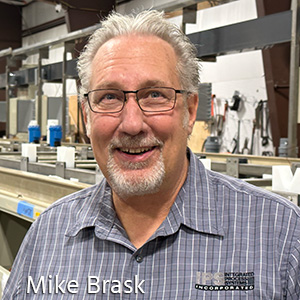
Mike Brask of IPS explores the shift toward automated chemical dosing in wet process lines for enhanced control, safety, and product reliability. Mike emphasizes that automating chemical dosing reduces variability, ensuring consistent quality and safer working conditions. He notes past reliance on manual labor and highlights current challenges, including space limitations and regulatory hurdles.
Why You Need to Take This New ‘Semiconductor Essentials’ Course

Recently, Andy Shaughnessy and Nolan Johnson met with Soo Lan Cheah, the developer of a new IPC course geared toward PCB manufacturing professionals who have little to no knowledge about semiconductor manufacturing. With her background in PCB and IC design, Soo Lan brings a circumspect vision of these disciplines and how they are inter-related. You don’t need to know a lot of math to take this course, and you’ll come out with a much better understanding of the whole silicon-to-systems approach.
I-Connect007 Editor’s Choice: Five Must-Reads for the Week
It is the last weekend before the much-celebrated Labor Day holiday, also known as the official end of summer. Though I am not yet ready for pumpkin spice lattes and heinously early Christmas decorations, I do relish the end of the heat. But the heat in our industry is not set to die down anytime soon, nor should it. Just about one month shy of the end of Q3 2024, things are looking positive for many industry members, so let’s make sure to keep the metaphorical pedal to the metal for a strong quarter-end and a great upcoming trade show season.
Navigating Cost Drivers and Sustainability in PCB Production: A Comprehensive Guide

In May, I had the privilege of presenting "Cost Drivers in PCB Production" to attendees at the SMTA Wisconsin Expo. This presentation, one of our most popular, received tremendous feedback, inspiring us to share our insights more broadly through a comprehensive white paper on the subject. One of my favorite examples to share from this white paper which really illustrates the impact of both cost and sustainability is panel utilization.
Cost-optimize Your PCB Design and Specifications

Knowledge is the key to identifying the small details that makes the big cost difference for your printed circuit board. There are many types of printed circuit boards and multiple choices between the development of schematic and BOM to PCB technology selection, electronic PCB design, mechanical and physical properties, and PCB specification.
Maximizing ROI Through Better Wet Process Control

“When things get out of control, the variation in your wet process begins,” says Mike Carano,. “Just because they look like good boards and may even pass electrical test, it does not necessarily mean you have good boards. Once the chemistry is headed toward the right or left side of the process control parameter cliff, the plating is compromised. If the copper is thinner than it should be, when the customer puts it into service, the board may fail after 500 cycles vs. the requisite 1,000 or 2,000 cycles. The root cause issue is that you plated 7/10ths of a mil of copper instead of one-mil of copper because you were not controlling your process. The fact that you passed your own electric test becomes inconsequential.”
A Less Expensive Defense and Aerospace PCB Fab Startup

Editor’s note: Investing in a new printed circuit board fabrication startup is not for the faint of heart or the light of wallet. Standing up a new “high-tech” PCB fab facility capable of becoming qualified for aerospace and defense work typically takes a minimum investment of $50 million. However, Alex Stepinski says entering the defense and aerospace markets with a new PCB fabrication start-up facility far under this prohibitive cost benchmark is possible when good partnerships, innovation, and sound engineering design enter from the beginning. In this article, Alex Stepinski outlines just how this can be achieved.
I-Connect007 Editor’s Choice: Five Must-Reads for the Week
People are on the move, new books are being released, and a new PCB manufacturer is making waves. This week, I'm highlighting the latest ASC/Sunstone book on DFM essentials, our 40th book in the I-Connect007 library and a must-read whether you're a new or seasoned member of industry. I'm also including leadership news from NextFlex, a discussion on integrated passives from Joe Fjelstad, and a new processor chip from Intel meant specifically for automotive applications.
Copyright © I-Connect007 | IPC Publishing Group Inc. All rights reserved.
Log in