

















 Elementary, Mr. Watson: Waking Up Europe's PCB Giants
 Connect the Dots: Getting the PCB Quote Right
 Powering the Future: What Engineers Get Wrong About Designing for Reliability





Latest Articles
Collaboration: The Key to Streamlining Your Design Process

We recently spoke with Patrick Davis, product management director of Cadence Design Systems, about the benefits of collaboration between PCB designers and fabricators—and the drawbacks to throwing designs “over the wall.” Patrick explains why designers and fabricators often seem to be talking past each other, the role that EDA software companies can play in facilitating collaboration, and why IPC-2581 may be the right means for connecting all of design’s stakeholders.
From DesignCon: Insulectro Educating Designers About New Materials
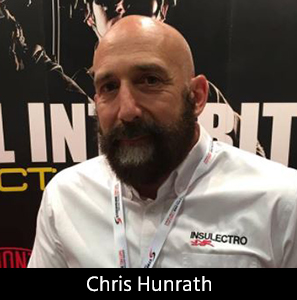
I recently met with Insulectro VP of Technology Chris Hunrath at DesignCon 2021. We discussed a variety of new laminates that Insulectro is distributing, as well as some newer processes and the need to educate designers on the ins and outs of cutting-edge laminates.
Seeking Out Design Education Resources

I’ve been doing PCB design for about 15 years. I started in high school, drawing out simple circuits in an image editor and raiding the local Radio Shack for ferric chloride and copper-clad boards for toner transfer etching. The results were crude, and often didn’t work, but the process was fascinating—and truthfully still is. For as empowering as it can be, PCB design has a shockingly low barrier to entry.
Paying it Forward: DFM Education for Engineering Grads

Every day, I had the opportunity to drive to several Seattle-based design companies and meet with their engineering staffs, usually full of young, recently graduated electrical engineers. Almost every company I visited had employed several recent EE graduates (all named Zach, Ian, or Ashley, it seemed) who were tasked with laying out PCBs. I could tell in a heartbeat that these kids were smart.
How to Use Panelization Planning to Save Money and Resources

In this interview, Siemens’ Patrick McGoff speaks with Nolan Johnson about strategies to utilize panelization planning to save money and resources.
I-Connect007 Editor’s Choice: Five Must-Reads for the Week

The past couple weeks have delivered quite a bit of PCB manufacturing industry news, to be sure. If you haven’t already seen this news piece from USPAE, “Electronics Industry Summit With US DoD Spawns More Dialogue, Collaboration,” I’d like to bring it to your attention one more time.
Altium’s Nexar Platform Unites Design, Supply Chain, and Manufacturing, Part 1

The I-Connect007 Editorial Team recently spoke with Ted Pawela, chief ecosystem officer and head of the Nexar business unit at Altium. Ted discussed Altium’s new Nexar cloud platform which aims to build an ecosystem that connects designers, supply chain companies, and manufacturers.
The Impact of Via Structures on Multi-Gigabit Signal Transmission

This article briefly introduces various via structures on the PCB for layer transition purposes. It also investigates the impact of these via structures on multi-gigabit transmission by analysing time domain reflectometry (TDR), differential insertion loss (Sdd21), and eye diagrams.
From DesignCon: Isola Navigating a Challenging Supply Stream

Nolan Johnson and Andy Shaughnessy visited with Jim Hartzell of Isola to learn about how the company has thrived in the past 18 months, despite some real supply chain backlogs. Jim also talks about new products, and what’s on the horizon for Isola.
DFM from the Fabricator’s Point of View
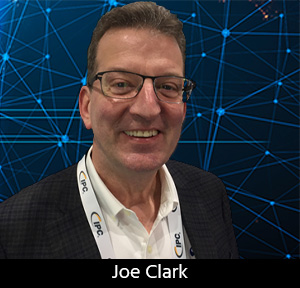
What do you think of when you hear the term DFM? The I-Connect007 Editorial Team posed this question to a trio of design and fabrication experts: DownStream Technologies co-founders Joe Clark and Rick Almeida, and Max Clark, business unit manager for Valor at Siemens EDA. We think you’ll enjoy this wide-ranging conversation.
I-Connect007 Editor's Choice: Five Must-Reads for the Week
This week, we’ve covered a variety of topics in our newsletters and websites. In my Top Five picks, we have quite a mixed bag of industry news and articles. In market reports, there’s good news from the North American PCB side of things, but bad news from the EMS segment, driven by long lead times and material shortages. We also have an article that gets down to the root cause, or causes, of the six-month lead time and price increases.
Review: Siemens PCB Stackup Planning Webinar

I love getting to know new tools in the industry, especially when they address issues that haven’t been included into the layout software yet. This Siemens webinar on stackup design, presented by Z-zero founder and HyperLynx alum Bill Hargin, offers a variety of tips for designers and design engineers. I totally agree with Bill’s statement, “The PCB stackup is the central nervous system of the design.”
Unfolding Altium’s Design Education Platforms

For the August issue on PCB design education, we knew we had to speak with Judy Warner, director of community and industry engagement for Altium. Judy has been heavily involved with Altium’s educational programs, including the technical presentations for their annual conference, AltiumLive. The I-Connect007 Editorial Team asked Judy to discuss Altium’s educational plans going forward, specifically AltiumLive’s transition back to live, in-person shows soon to be offered in a new hybrid format.
The EMS/Designer Relationship: Kelly's Story
In a recent discussion with John Vaughan and Kelly Dack, we explored how parts availability information can reverberate back to the design team in unexpected ways. In this part of the interview, Dack details how a parts availability issue can restart the design all the way back with the OEM design team.
Designing With the End in Mind—How the Meaning of DFM Will Transform in the Future

Designers of today’s complex printed circuit boards occasionally encounter setbacks due to their lack of early planning. Such consequences for apathy in preparation and awareness will continue to escalate along the growth curve of complexity that the industry continues to experience. In this article, Altium's Vince Mazur explains how designers can be served by a design for manufacturing (DFM) mindset to help assure first-pass success.
You Can’t Learn PCB Design on Your Own

When Editor Andy Shaughnessy asked me to comment on the best path for new PCB designers to learn the trade, I had one immediate thought: I don’t think anyone can learn PCB design on their own. It’s just not possible today. There’s always more to learn in PCB design, and more than one way to learn.
I-Connect007 Editor’s Picks: Five Must-Reads for the Week
I’m at DesignCon as I start pen this week’s must-reads. It’s good to be back in the convention centers, I have to say. In my last installment, I expressed the anticipation; I can now confirm that taking the pulse of our industry is so much easier when one is nearer the heartbeat.
DesignCon Day 2: PCB Exhibitors and Sessions Aplenty

The first day of DesignCon, held at the McEnery Center in San Jose, seemed to be more lightly attended than in previous years. While that may seem like bad news, word from exhibitors was that those in attendance are here to do business. Likewise, the technical conference seems to be delivering on its promise.
DesignCon 2021 Kicks Off With a Family Reunion

It’s been a long 18 months since DesignCon 2020, and we’re all different people, and a different industry. So, it seems only fitting that DesignCon 2021 held a Family Reunion banquet at the end of the first day of the conference at the McEnery Convention Center in San Jose, California.
My Road to Becoming a Great Designer

It was halfway into 2009, I had recently graduated from the University of Guelph with a bachelor of engineering in systems and computing, and the options for employment were slim. Unfortunately, I had entered the workforce during the very tail end of the 2008 financial crisis and was having difficulty finding employment in any field. It would be the better part of a year before I was able to start in the first position in my field as a junior electronics engineer.
I-Connect007 Editor’s Choice: Five Must-Reads for the Week
Well, we’re officially in the trade show season. Delta variant or not, Editor Nolan Johnson and I are going to DesignCon next week. I’m flying on Delta, which I think is a harbinger of good luck. I did get flight insurance, though. I’m definitely ready to fly somewhere.
My PCB Design Education: A Continuous Process

Being under pressure to deliver functioning boards, on time, made me aware of what could go wrong, and it forced me to employ a systematic approach to every design I work on. I started keeping notes of the tricks I learned along the way and because of that, I ensured that I wouldn’t make the same mistakes again. Here are some of the design practices that I’ve been following while designing boards.
Design Education and Training for Today and Tomorrow

PCB design and design engineering are evolving constantly, and design education and training must also evolve to meet the needs of tomorrow’s young designers—yes, there are young designers again. The I-Connect007 Editorial Team recently spoke about this issue with design instructor Susy Webb, CID. We asked Susy to discuss how design and training have changed in the last few decades, where design education is headed, and how today’s crop of new designers differs from the “graybeards” who are planning their retirements. She also recommends design education resources from a variety of media formats.
Ask the Experts: Why Are Fabricators Reluctant to Share Capabilities with Designers?

Q: No offense to your experts; I love your publication. But wouldn’t designers be better off posing questions to fabricators’ CAM departments? But they won’t answer them anyway! Which begs a question: Why don’t most fabricators share their capabilities, Valor settings, etc., with designers? And then they complain?
I-Connect007 Editor’s Choice: Five Must-Reads for the Week
This week’s must-reads include: a recently-run interview with Travis Kelly from Isola; IPC Chief Economist Shawn DuBravac discussing economic trends that will touch the industry; new high-speed materials; technique for copper pour from Design007’s recent “Just Ask…” series; and maintaining continuous manufacturing knowledge throughout your enterprise.
Ask the Experts: Replacing the Retiring 'Graybeards'
Q: Our company’s senior designers and EEs, including me, are heading for retirement and pickleball. How can we attract new/young people into PCB design?
Excerpt: The System Designer’s Guide to… System Analysis, Chapter 1
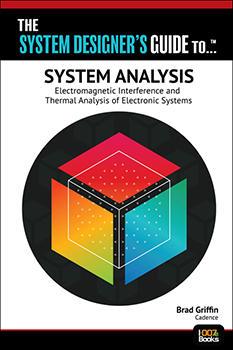
System designers for 5G, automotive, high-performance computing (HPC), IoT, and other advanced applications have been facing growing challenges in EM interference and thermal issues. These are prevalent in all electronic devices. Data centers play a key role in this high-performance computing (HPC) era, and EMI/thermal issues have a huge impact on the performance of data centers. This book explains scenarios and issues based on the context of data center electronic systems.
DFM 101: PCB Controlled Impedance

One of the biggest challenges facing PCB designers is not understanding the cost drivers in the PCB manufacturing process. This article is the latest in a series that will discuss these cost drivers (from the PCB manufacturer’s perspective) and the design decisions that will impact product reliability.
Ask the Experts: Copper Pour on Unused Layer Sections?
Q: Is it best practice to flood with copper (tying all areas to GND as needed) all unused portions of all layers?
I-Connect007 Editor’s Choice: Five Must-Reads for the Week
In the past week, we published quite a bit of news—some good, some not so good. The supply chain is likely to be a challenge for the next year or so. But in this industry, technologists always seem to find a workaround.
Ask the Experts: Determining Amount of Copper for Heat Dissipation
Q: When a datasheet calls out an area of copper for heat dissipation, how do I interpret that requirement for my board?
Whizz Systems: The Silicon Valley CM

The I-Connect007 Editorial Team spoke with Whizz Systems in the months prior to COVID. As we come out of lockdown, we decided to check in with Muhammad Irfan and Dan Williams of Whizz Systems. In this part of the interview, they discuss Whizz Systems’ unique methods for navigating the many handoffs involved in the design and manufacturing process, as well as their drive to educate their customers about this process. They also share their thoughts on the trends they’ve seen as a CM working out of Silicon Valley.
I-Connect007 Editor’s Choice: Five Must-Reads for the Week
In this week’s top five: a high profile surprise merger between Autodesk and Altium, which had been in the works, resolved this week; financial news from fabs and assemblers around the globe is reporting strong bookings and sales as the industry bounces back from pandemic-related shutdowns; component demands continue to exert pull pressures on the semiconductor suppliers, keeping the market (overly?) competitive pricewise. The tiles are indeed being stirred. Which pieces will you be dealt?
Ask the Experts: Tying Vias
Q. What is the best method for tying vias to ground and power planes for bypass capacitors when using multiple caps of different values for one component power pin?
Siemens Webinar: Rigid-Flex Design Without Respins

Rigid-flex circuits have become almost ubiquitous over the past decade; most personal electronic devices contain at least one rigid-flex circuit. But there’s a downside to rigid-flex: Respins are almost a given with rigid-flex designs. And rigid-flex respins can be quite expensive, since this technology costs quite a bit more, on average, than flex or rigid boards.
Rogers Technology Update

At the IEEE International Microwave Symposium (IMS) show in Atlanta, I met with John Coonrod, technical marketing manager with Rogers Corporation and a Design007 columnist. I asked John to discuss the papers he presented at IMS and to give us an update on Rogers’ materials and technology.
Anaya Vardya Discusses ASC’s Move into Additive Processes
It’s been far too long since I’ve been at a live trade show, so I jumped on the chance to attend the IEEE International Microwave Symposium (IMS) show in Atlanta. I ran into Anaya Vardya, CEO of American Standard Circuits, and asked him to give us an update on ASC’s new technologies.
I-Connect007 Editor’s Choice: Five Must-Reads for the Week
Trade show season is around the corner, and we’re talking about real, in-person trade shows. The virtual shows served their purpose, and we may see more virtual shows in tandem with live events, but I’ll be glad to get back on the show floor and see what’s “really” going on out there. It's great to see IPC’s hand soldering competitions returning to Europe this fall.
The Survey Said: Most Common Design Mistakes

In a recent I-Connect007 survey to designers and design engineers, we asked the following question: What are the most common design mistakes that your company encounters?
Ask the Experts: 12-Layer Stackups With Multiple Powers and Grounds
Question: We’re having lots of problems designing good stackups for 6-, 8-, 10- and 12-layer boards with multiple powers and grounds. Any suggestions?
Averatek Pushing Boundaries of Additive and Semi-Additive Processes
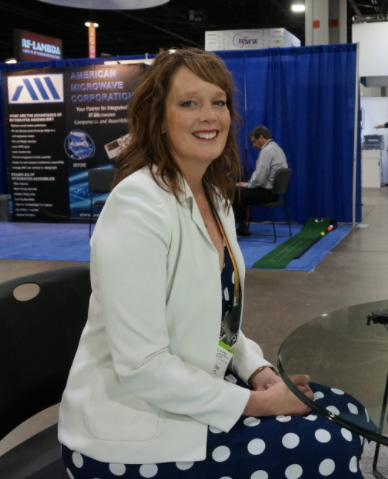
At the IEEE International Microwave Symposium show in Atlanta, I met with Tara Dunn, I-Connect007 columnist and VP of marketing and business development for Averatek. We sat down at the show and discussed the past year and a half, and after joking about how we felt like we were on an episode of The Twilight Zone, Tara gave me an update on Averatek’s continuing research into additive and semi-additive technologies.
I-Connect007 Editor’s Choice: Five Must-Reads for the Week
This may be a global industry, but the effect is very real: holidays in the U.S. will drive the industry news cycle. In fact, I can even (unscientifically) rank the major U.S. holidays by their silencing effect on the news. Christmas leads the way, of course, followed by New Year’s, Thanksgiving, Independence Day, Memorial Day, and Labor Day. Here's a wrap-up of the biggest stories of the past week, starting before Independence Day weekend.
Ask the Experts: Crosstalk Solutions
Question: Crosstalk is getting worse, after we had it under control. It’s not just transmission lines anymore. It’s almost laughable, but it’s costing us money. What can be done?
It’s FR-4, Jim, But Not as We Know It!

As Star Trek was responsible for adding terms such as photon torpedo, dilithium crystal, and warp drive to our language, so NEMA were responsible for the terms G-10, FR-4, and FR-5. “FR” was the NEMA abbreviation for “flame retardant” and materials so classified were marked with a red manufacturer’s logo.
Star Trek: Laying a Path for Technology of Tomorrow, Today

In 1966, when Star Trek first aired, PCBs were in their infancy. A handful of components mounted to a double-sided board with 6-mil traces was on the leading edge of electronics. Since then, much of electronic innovation has been driven by PCB technology. Could the trends in PCB innovation have been predicted at that time? Perhaps through science fiction like Star Trek we can boldly explore our own final frontier.
I-Connect007 Editor’s Choice: Five Must-Reads for the Week
Optimism is on the rise. This week, we saw signs of increased confidence in the PCB industry, but this was tempered by the realities of supply chain issues and 50-week lead times for some components. We saw some M&A activity and a bit of really interesting news from Stanford University about flex. Cherie Litson brought us a story of her life in PCB design, against a backdrop of Star Trek. IPC also announced an introductory PCB design class. Isn’t it nice to have new designers again?
My Life in PCB Design
In a cold (62°F), semi-dark room, there are banks of mainframe computers along one wall; a soft light glows upward from the table in the corner. I take my kit—a variety of sizes of black, red, and blue tape, decals, and an X-Acto knife—and set it on the side table.
I-Connect007 Editor’s Choice: Five Must-Reads for the Week
This week, Nolan Johnson's top five includes two popular press releases on equipment purchases, plus a case study that details another company’s ROI from new equipment. We also bring you Pete Starkey’s latest EIPC webinar writeup, and a bit of historical controversy from Clyde Coombs.
Hewlett-Packard’s Adoption—and Controversy—of Plated Through-Holes

I believe that it is instructive to remember just how close Hewlett-Packard—and likely the entire industry—came to adopting eyelets instead of plated through-holes in the early 1960s. That there was ever a controversy over the use of plated through-holes as an acceptable printed circuit interconnection process seems almost impossible to consider, let alone take seriously today. But in the late 1950s and early 1960s, the PTH was not just a controversial idea; serious product designers considered eyelets a preferred technology.
EIPC Technical Snapshot Review: Microvia Reliability Issues

Since the mid-1990s, when they were developed for mass production in the mobile phone industry, microvias have become principal enablers for high-density designs, and have evolved from single-level to complex stacked and staggered structures. They are fundamentally robust interconnects, although some aspects of their reliability are still under investigation.
I-Connect007 Editor’s Choice: Five Must-Reads for the Week
It’s summertime here in Atlanta. The masks are gone, and my Hawaiian shirts are back in rotation! It feels like we’re getting back to normal. Speaking of normal, it looks like DesignCon, PCB West, SMTA International, and IPC APEX EXPO are good to go; they’re set to be live, in-person events, just like in the “olden days” of early 2020.
‘The Trouble with Tribbles’

The original Star Trek series came into my life in 1966 as I was entering sixth grade. I was fascinated by the technology being used, such as communicators and phasers, and the crazy assortment of humans and aliens in each episode. My favorite episode is “The Trouble with Tribbles,” an episode combining cute Tribbles, science, and good/bad guys—sprinkled with sarcastic humor.
ICAPE Group Offers Boots on the Ground Support in Asia

Nolan Johnson speaks with Roger Harts about some of the current complications around manufacturing electronics in China and how ICAPE Group works as a vital supplier partner to OEMs and companies hoping to manufacture in Asia.
Words of Advice: Biggest Challenges for Designers
In a recent I-Connect007 survey to designers and design engineers, we asked the following question: What is the biggest PCB design challenge that you or your company deal with regularly? Here are a few of the responses, edited slightly for clarity.
I-Connect007 Editor’s Choice: Five Must-Reads for the Week
This week’s can’t miss news items touch all the bases—unlike Pittsburgh Pirates Rookie Ke’Bryan Hayes, who didn’t touch all the bases on Tuesday night’s game, and had his home run revoked.
ExpressPCB Plus 3.0 Adds Functionality, SnapEDA Integration

ExpressPCB has recently released version 3.0 of its ExpressPCB and Express PCB Plus PCB design tools. The I-Connect007 Editorial Team recently spoke with Michael Hebda, product manager for ExpressPCB. He offered a walk-through of the new Plus version 3.0 and explained how the new enhancements enable PCB designers to potentially cut hours or days off their design cycle.
Star Trek, the Original Series: An Homage from a Fan

It’s fun to think back to the days when I first saw Star Trek on TV. In September 1966, I was a sophomore in college in chemical engineering. Being a science fiction fan for many years, I was looking forward to this new show, so I would go over to the student union building early in order to get a seat in the TV room. I got interested in science fiction from a few good movies like 20,000 Leagues Under the Sea (1954) and Forbidden Planet (1956). Then I took up reading the magazine Scientific American at the library.
Catching up With Kusu’s Pascal Delloue

There are other countries in Asia besides China and Pascal Delloue intends to promote them. He has many years of experience in the global marketplace and his new company, Kusu Corporation, is poised to introduce SE Asian companies and the electronics products they can provide for the rest of the world. I have to say this is an interview like no other I have ever conducted. Read on and you’ll see what I mean.
I-Connect007 Editor’s Choice: Five Must-Reads for the Week
In case you’ve been on the beach with an umbrella drink in your hand, in industry news we saw the soft opening of a new laminate facility and more M&A activity in the PCB fab segment. And we ran some really great content from our contributors, with articles on how to save your company money and how to save yourself time in the design cycle. Plus, Editor Nolan Johnson channels his inner John Updike with his review of one of the most popular manufacturing strategy books ever, three decades after its publication.
My Ongoing Journey Toward DFM
For the past five years I have spent the first several hours of each working day communicating with a wide variety of offshore manufacturers about customer PCB design issues. I must say, it has been an eye-opening experience. Not only have I learned a lot about PCB manufacturing capabilities and challenges around the world but also about the design for manufacturability (DFM) attitude and aptitude of a wide cross-section of North American PCB designers and design engineers.
Copyright © I-Connect007 | IPC Publishing Group Inc. All rights reserved.
Log in