












 Elementary, Mr. Watson: Waking Up Europe's PCB Giants
 Connect the Dots: Getting the PCB Quote Right
 Powering the Future: What Engineers Get Wrong About Designing for Reliability






Latest Articles
Sensible Design: Thermal Management—The Heat is On

Thermal management materials are designed to prolong equipment life and reduce incidences of failure. They also maintain equipment performance parameters and reduce energy consumption by reducing operating temperatures, and minimising the risk of damage to surrounding components. Indirectly, they maintain brand reputation, as the reliability of the equipment will be very dependent upon the effectiveness of the thermal management technique used.
Fault-Finding: It’s All About Prevention, not Blame

There are thousands of things that can go wrong during the design and manufacture of a PCB assembly. One might say that it is an absolute miracle when a PCB goes through all of its phases—design, fabrication and assembly—and operates successfully. But there are some management and customer cultures who naively attempt to resolve problems by seeking out the culprits and shouting “Off with their heads!”
Whose Fault is That Bad Board?

Years ago, I held a position in an EMS company where projects were analysed before manufacturing. We found that even some of the best and most innovative circuits could not be manufactured. Why? Because the PCB designer, an electronic engineer, was not acquainted with the fabrication process. He had no idea about technological requirements necessary for electronic production. I know another designer who learned, finally, the importance of the thermal relief pad for heat restriction during reflow for a good soldering. His response? “Oh, was that what they were for? And to think I worked so much to remove them!”
Enough Blame to Go Around

The idea for this article began a few months ago when The PCB Design Magazine conducted a reader survey regarding the topic “Whose Fault is that Bad Board?” After some thought, I submitted my answers. After all, I must have some kind of input after over 25 years of PCB design. But still, whose fault is that bad board? OK, I know what you’re thinking: Don’t go there. We designers make mistakes too.
The International Paris Air Show with ASC’s Anaya Vardya

The International Paris Air show is the crème de la crème of the world’s trade shows. This is the big one, where all the aircraft, airline and defense aerospace companies meet to introduce new products, discuss the future of aviation, and make deals. This year I decided to talk to my friend Anaya Vardya, ASC’s president and CEO, about the show, why he goes and what it’s like.
Resins: Cutting Through the Technical Jargon

This month, I’m going to cut through some of the more heavy-going tech-speak, taking a few of my customers’ more frequently asked questions about resins to try to help you refine your selection process. There’s a lot of ground to cover, but for the purposes of this column, let’s concentrate on the PCB’s operating environment, caring for the components that are to be encapsulated, and the special needs of applications like LED lighting and RF systems.
Stephen V. Chavez Talks Mil/Aero PCB Design

Stephen V. Chavez, CID+, is the lead PCB designer for the Electronic Systems Center division of UTC Aerospace Systems (UTAS), a military contractor that builds all manner of cutting-edge tools for the American warfigher. He’s been designing military and aerospace PCBs for decades, and he’s a veteran of the United States Marine Corps. I caught up with Steph and asked for his thoughts on designing PCBs for the military and aerospace markets.
Orange Co. Designers Council Meeting Focuses on Embedded Passives

On July 19, the Orange County Chapter of the IPC Designer’s Council hosted a lunch-and-learn meeting in Tustin to discuss the benefits of embedded passives. Approximately 40 people were in attendance, which was lighter turnout than usual, most likely because of summer vacations. But the crowd was an enthusiastic one, as usual. The first speaker was Bruce Mahler of Ohmega Technologies, followed by Jin Hyun-Hwang of Dupont.
IMPACT Interview: Fern Abrams, IPC

At the recent IMPACT Washington D.C. 2017 event, I-Connect007's Patty Goldman speaks with IPC's Fern Abrams to get the inside story on the meeting with EPA.
Using Vibration and Acceleration Analysis to Improve Reliability
Deriving the physical constraints and fatigue issues for a design prior to manufacturing is essential to reducing board failure and thereby improving product quality. In harsh environments, fatigue can be responsible for up to 20% of failures. Customers have come to expect reliability across the industry spectrum no matter where actual production occurs. Reliable products have less risk of failure, less field returns and less warranty claims, all of which contribute to higher profitability. It is a given that every product is expected to fail at some point, however premature failures can be mitigated through proper design with attention to potential issues due to vibration and acceleration.
Trilogy Circuits: Mil/Aero Demands Technological, Regulatory Expertise

In the 16 years since its founding, Trilogy Circuits has become one of the go-to companies for mil/aero PCB design and manufacturing. I spoke with Charlie Capers, president and founder of the Richardson, Texas firm, about how he keeps ahead of the game. As he explains, succeeding with mil/aero PCB work requires not only mastery of the technological side, but of the regulations and certifications as well.
PCB Designers Notebook: Embedding Components, Part 2

Technology and processes for embedding capacitor and inductor elements rely on several unique methodologies. Regarding providing capacitor functions, IPC-4821 defines two methodologies for forming capacitor elements within the PCB structure: laminate-based (copper-dielectric-copper) or planar process and non-laminate process using deposited dielectric materials.
Performance Evaluation of Thin-Film Embedded Resistors

Thin-film microstrip circuits have been widely applied in microwave communications, electronic countermeasures (ECM), and aerospace applications, etc. When manufacturing thin-film ICs, it is very important to apply deposited thin-film resistor material to fabricate high-accuracy and highly stable thin-film embedded resistors. Thin-film ICs call for thin-film resistors that meet stringent requirements.
Review of the 2017 IPC Reliability Forum
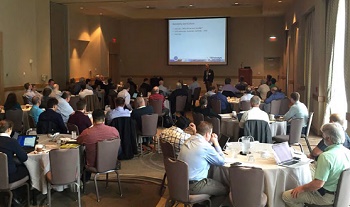
IPC continues to lead our industry by example with their inaugural Reliability Forum, held in Chicago in April. The event was focused on manufacturing high-performance products and featured industry royalty from both a speaker and audience standpoint.
Embedded Technology: A Useful Tool in Freedom CAD’s Toolbox

Freedom CAD has been designing and fabricating boards with embedded technology for years, and doing some pretty innovative work along the way. I asked Scott McCurdy, Freedom CAD’s director of sales and marketing, to share some details about their embedded processes, as well as the challenges and opportunities that embedded technology offers.
New Challenges Facing Mil/Aero Segment

For this month's issue, we invited a sampling of professionals whose experience centers on the electronics industry in the military and aerospace world, including experts from design, PCB manufacturing, and the assembly arena to sit down with us for a frank discussion. Our discussion centered on the challenges associated with military work, including the new regulatory requirements for cybersecurity, dealing with leaded vs. lead-free components, and the differences and similarities with the commercial world.
A Deep Look Into Embedded Technology

In preparation for this month’s magazine, we set up a conference call with the goal of uncovering the challenges and opportunities related to embedded technology. Invited were a handful of the industry’s heavy hitters in the embedded world: Retired technologist and I-Connect007 Contributing Editor Happy Holden, and Ohmega’s Technical Director Daniel Brandler and Design & Test Engineer Manuel Herrera.
Launching a New PCB Design Curriculum in Serbia

Let me share with you an experience that I remember from my college days. When I was a student, I had a professor who was too proud of the fact that she was an academic. “You don’t need to know how to manually solder electrical parts or how to design printed circuit boards,” she lectured. “It is important that you understand the formula for charge carrier currents in a p-n junction.” I started working as an R&D engineer for a Swiss company that developed and manufactured instruments for measuring magnetic fields and electrical currents. And nobody ever asked me about charge carriers in p-n junctions.
Technology Enabler Highlights Benefits of Having Design Services for an EMS Firm
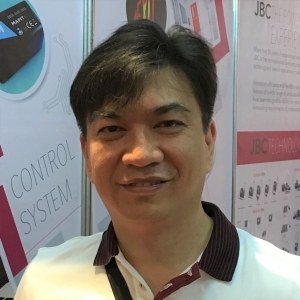
At the 14th Philippine Semiconductor and Electronics Convention and Exhibition (PSECE) held last week in Manila, Robin Ramiso, design and development manager at Technology Enabler, discusses their activities, and the benefits of having a design services team for an EMS company with I-Connect007 Managing Editor Stephen Las Marias.
Better Together: How HDP User Group Showcases the Industry’s Best Side

HDPUG is a non-profit trade organization comprised of members from top companies in the electronics industry, from materials suppliers and manufacturers, to OEMs and end users. Key activities include collaborating on issues facing multiple industries and bringing people together on projects who might not have met otherwise. Barry Matties met HDPUG’s European representative and project facilitator Alun Morgan at the recent EIPC Summer Conference to learn more about the group and current projects.
Global Impact on European PCB Fabrication: EIPC Summer Conference 2017, Day 2
The second day saw the conference room full once more, the late networking session in the bar having resulted in no significant casualties, and I was pleased to accept the invitation to moderate the first session, on processes and materials for flexible PCBs.
Romania’s PCB Design Students Compete at TIE 2017

During the last week in April, the 26th Interconnection Techniques in Electronics (TIE) show was held at the Gheorghe Asachi Technical University in Iasi, Romaina, a wonderful hill town not unlike Rome. The event, a convention for the Romanian electronic packaging community, included a series of actions designed to draw smart young students to the electronics industry, which is clearly growing. Participants had only four hours to create this PCB design, which was generated by a team of professionals from Continental Automotive Romania Timisoara.
Global Impact on European PCB Fabrication: EIPC Summer Conference 2017, Day 1
Electronics industry professionals from 13 countries, mainly from Europe and Scandinavia, others from the USA, but some from as far away as India and Japan, gathered in Meriden, the centre of England, for the EIPC Summer Conference.
Must Work Well on a Team; CID a Bonus

Throughout my decades-long career in PCB design, I have been fortunate. I’ve only had to search for a job out of desperation once. I had no idea my IPC Certified Interconnect Designer credentials would come in handy when I hit the pavement. It also helped that I am known to "work well on a team." It turns out that being able to play well with others is a real plus in the PCB design community.
Whose Fault is it When the Board Fails?

In an upcoming issue of The PCB Design Magazine, we will discuss a question that you've undoubtedly faced in your job: Whose fault is it when the board fails? Of course, everyone likes to blame the PCB designer. But think about it. Is the board shop at fault, or perhaps the EMS provider? Is it the customer's fault, or does the designer bear some of the blame after all? Take this quick survey and let your voice be heard!
HDP User Group 2017 European Meeting Highlights Technology Progress
The conference facility at the offices of Oracle, in the royal burgh of Linlithgow in West Lothian, Scotland, was the venue for the 2017 European meeting of the High Density Packaging User Group. I was delighted and privileged to be invited once again to sit in on the open session, an intense programme of technical presentations and discussions, project reviews, status updates and new project proposals.
PCB Design in the Age of IoT

From the early days of printed circuit boards, the electronics industry has made huge strides in board materials, copper printing methods, miniaturization, rigid-flex, ELIC, EDA, and much more. Many of the devices we use in our homes, our vehicles, and in our workplaces would not be possible without this continuous evolution of PCB design and technology. And yet in 2017, we are poised to shift from evolution to revolution, driven by the idea of the Internet of Things.
SnapEDA: Recruiting Top Engineering Talent in an Amazon World

You don’t have to love EDA to work at SnapEDA, but it helps. This startup, founded by Natasha Baker, is on its way to creating the world’s largest parts library for PCB designers. Baker leads a small team of young, fiercely talented engineers—the kind of employees that are attractive to companies like Google and Facebook. I asked Natasha to explain her hiring process, and how she ensures that each employee is the right fit for SnapEDA.
Steve Robinson Discusses APCT’s Tenfold Expansion

Steve Robinson, CEO of APCT, a PCB fabricator in Silicon Valley, has led the company to impressive growth since he acquired it nearly 10 years ago. I ran into Steve at DesignCon 2017, and we sat down to discuss the company’s remarkable transformation and his focus on working with PCB designers and engineers to create advanced, high-speed PCBs.
Altium Focuses on the Designer First

A few months before Judy Warner joined Altium, while she was still with I-Connect007, she sat down with Lawrence Romine to discuss the company’s drive to satisfy the individual PCB designer, and not necessarily the OEMs who employ them. Romine also explains what sets designers and engineers apart from the average person, and why some Altium users have a different primary EDA tool, but use Altium when they need a design done fast.
San Diego IPC Designers Council Meeting Held at Del Mar Show
The Del Mar Electronics and Manufacturing Show is a long-time favorite among PCB professionals. What better place to hold a meeting of the San Diego Chapter of the IPC Designers Council? Each year, the San Diego Chapter of the Designers Council hosts their largest meeting of the year at the Del Mar show. This year, approximately 50 PCB designers and electronics professionals attended the lunch-and-learn meeting.
Bruce Mahler Discusses Ohmega’s Resistive Material Technology

Bruce Mahler, vice president of Ohmega Technologies, sat down for an interview with me at DesignCon 2017. He discussed the company’s latest embedded resistive materials, as well as some of the drivers and challenges in that segment of the materials industry.
Sensible Design: Casting a Spotlight on Resin Applications
Over the last few columns, I’ve given readers pointers on virtually every aspect of potting and encapsulation resins, ranging from their formulations and special properties to their applications, benefits and limitations. It’s probably high time, therefore, to take a step back from the do's and don’ts and focus instead on how these resins are bringing very real benefits to practical electronic and electrical engineering applications. A good starting point is to look at the special requirements of an industry that is enjoying explosive growth: LED lighting.
IMPACT Washington 2017 Just Around the Corner

IPC's Government Relations team has worked around-the-clock to ensure that IMPACT Washington D.C. 2017 is the best yet. During this two-and-a-half day event, executives from IPC-member companies will have the opportunity to speak with leaders in Congress and the Administration in support of our common priorities.
TTM Shines a Light on Optical Interconnect

Are embedded optics on PCBs set to make a breakthrough in the upcoming years? According to Dr. Craig Davidson, VP of Corporate Technology at TTM, it might be closer than you’d expect. In a recent interview with the I-Connect007 team, Craig outlines TTM’s current pursuit of high-volume manufacturing lines able to deliver embedded optical interconnect, what that would mean for the PCB industry, and why he thinks there will be manufacturing production capability by 2020.
'Flexdude' Tom Woznicki Celebrates Company’s 25th Anniversary

Twenty-five years ago, Tom “Flexdude” Woznicki got laid off. A lot of people did, back during the mini-recession that helped bring Bill Clinton into the White House. So, he launched his own flex circuit design bureau and never looked back. Since then, he’s designed flex circuitry for everything under the sun, including the Mars Rover; the flex circuits he designed are visible in many of the Rover photos. I ran into Tom at DesignCon 2017 and we discussed the benefits of flex circuits, the expansion of the flex market, and his company’s first quarter-century in operation.
China High-Speed PCB Market Update with Polar's Simon Chan

During the recent CPCA Show in Shanghai, Editor Stephen Las Marias and Polar Instruments (China) Assistant Manager Simon Chan discussed the opportunities and challenges for Polar's customers in the Asia-Pacific region, as well as the current state of the high-speed PCB market in China.
Capitol Connection: IMPACT Update—To CEOs on Why You Should Attend IMPACT Washington, D.C. 2017
Here at IPC, we place a high priority on making our presence known in the halls of government, because so many policy debates have a direct effect on the electronics manufacturing industry. IMPACT Washington, D.C. 2017 is a chance to join with fellow industry executives in advocating for better public policies for a stronger, more advanced manufacturing economy.
Rigid-flex Design Tips and Best Practices
While the traditional “design-separately-then-assemble” approach minimized potential issues with the flex portions of the product, it also had several inherent disadvantages. These include the cost associated with the physical connectors; the space required for the physical connectors; the need to properly manage interconnects that have to transition between the separate rigid and flex PCBs (through the connectors); and, of course, the time and cost associated with assembly. The move to the current generation of rigid-flex technology mitigates these issues; however, they are replaced with a different set of challenges and concerns.
Mike Carano on the First PCB Executive Forum Held at IPC APEX EXPO 2017

When John Mitchell came on board as president of IPC, he decided to tap the members of the Raymond E. Pritchard Hall of Fame for suggestions and advice. So he established the IPC Ambassador Council and tasked them to create special programs for IPC conferences. It is this group of people who put together the recent PCB Executive Forum that was presented at IPC APEX EXPO 2017.
Perpetual or Subscription EDA Tool Licenses? That is the Question

After I began working at Altium, I started learning all I could about PCB design software licensing. I wondered about the pros and cons of perpetual vs. subscription licenses. I wanted to learn firsthand from PCB designers what kind of benefits they received and challenges they faced as a result of how EDA companies offered design tools. I reached out to a variety of sources to get a broad slice of insight into this evolving issue, and thus began my trip down the EDA licensing software rabbit hole.
Mentor Graphics Takes Best Paper Award at DesignCon

At DesignCon, I met with Dave Kohlmeier, senior product line director for Mentor Graphics. We discussed their Best Paper award and DesignCon sessions such as the Signal Integrity Boot Camp, as well as the new rigid-flex capabilities found in the HypeLynx suite.
Capitol Connection: Direct Legislative Action—IMPACT Washington, D.C. 2017
This ties in to why IPC–Association Connecting Electronics Industries invests so much into our government relations efforts. We place a high priority on government relations because so many public policy debates have large impacts on our industry. Our members continue to value our advocacy efforts on issues such as taxes, regulations, immigration and the environment.
A New Power Design Methodology for PCB Designs
Advanced PCB design is an iterative process of analysis-fix-analysis. Historically, this process is very time-consuming, requiring analysis experts and PCB designers to work together to find and fix layout problems. This article describes a new PCB design methodology that allows a PCB designer to perform the power design without having to run expert-level analysis tools. This methodology provides the setup automation for advanced analysis without the need to understand every minute parameter, and can be completed in a few steps.
Tom Hausherr Discusses PCB Libraries’ BOM Builder Service

PCB Libraries CEO Tom Hausherr and Editor Kelly Dack discuss PCB Libraries’ new BOM Builder service during IPC APEX EXPO. Equipped with the new LEAP technology, the BOM Builder can potentially save PCB designers days or weeks of time normally spent turning a BOM into a CAD library.
Catching up with Polar Instruments' Geoffrey Hazelett

Product specialist Geoffrey Hazelett discusses some of the latest developments at Polar Instruments, including a new tool that will allow fabricators to determine how copper roughness will affect the end-product. He also talks about Polar's upcoming eBook on signal integrity, soon to be published by I-Connect007. Talented young technologists like Geoffrey are the future of our industry.
Cadence’s Zhen Mu Discusses Her Power-Aware Analysis Solution White Paper

At DesignCon, I met with Zhen Mu, senior principal product engineer with Cadence Design Systems, and Brad Griffin, product marketing director for Cadence. We discussed Zhen’s new white paper, “Power-Aware Analysis Solution.”
Exciting New Technology: Thermal Risk Management

Two years ago I entered into a collaboration with Dr. Johannes Adam, from Leimen Germany. Johannes has written a software simulation tool called Thermal Risk Management (TRM). We used it to look at the thermal characteristics of PCB traces under a variety of conditions, and it is hard for me to contain my excitement and enthusiasm for what it does and what we learned about traces using it. Our collaboration resulted in the publication of numerous articles and a book. In this article, I’ll talk about some of the capabilities of TRM that really caught my attention.
RTW IPC APEX EXPO: APEX EXPO Wrap-up Roundtable

Publisher Barry Matties and Managing Editor Andy Shaughnessy join Bob Neves of Microtek Labs for a review of IPC APEX EXPO 2017 and a look at the state of the PCB industry.
Kelly Dack and Mike Creeden: Are We in a PCB Design Renaissance?

Technical Editor Kelly Dack and San Diego PCB founder Mike Creeden discuss some of the trends they're seeing in the PCB design community, including greater numbers of young people becoming designers and more EEs doing design work. They also focus on IPC's training and designer certification efforts, and the need for designers to get out of the office and visit a board shop once in a while.
Time-Lapse Video: The IPC APEX EXPO 2017 Show in Under Seven Minutes!

During IPC APEX EXPO 2017, we at I-Connect007 had our time-lapse camera running from setup to closing. The camera was positioned high in our studio, where we conducted our RealTimewith…IPC APEX EXPO video interviews, aimed down the main aisle.
Selling PCB Design Services in a First-World Country

As the business operations manager for Better Boards Inc., I see our company at the focal point for consolidation: a gathering of skilled board designers to create a center of excellence. It is at this point that we have the critical problem facing a PCB design services company: How do we effectively sell these services back to the companies that cast off their own skilled employees? How do we sell PCB design services into small companies that can barely afford the one overworked electrical engineer that they hired last year?
Real Time with...IPC: Jim Fuller Offers HDPUG Update

Sanmina's Jim Fuller gives his insight on how the High-Density Packaging User Group (HDPUG) shares the experience and resources of member companies to tackle projects and get results. Also, he reviews the study of the effect of copper bonding treatment on signal integrity
Real Time with...IPC 2017 Videos Now Available for Viewing

Over 70 video interviews from the IPC APEX EXPO 2017 show in San Diego, CA are now available for viewing. See the opening ceremony, hear from suppliers and others on their new products, learn more about the HDP Users Group. Don't miss the videos by IPC President John Mitchell and his staff.
EIPC 2017 Winter Conference Review of Day 2

Almost everyone made it back to the conference room for the start of the second day of the EIPC Winter Conference in Salzburg, even those who had enjoyed the late networking session into the early hours!
In Deep: The Art and Science of DFM with Gary Ferrari

When the topic of DFM techniques came up, I knew I had to talk with Gary Ferrari of FTG Corp. Gary has been involved with designing and manufacturing PCBs for decades, and he’s the past co-founder and executive director of the IPC Designers Council. I caught up with Gary between Thanksgiving and Christmas, and we conducted the following interview.
The Evolution of PCB Design and Designers

According to Rainer Asfalg of Altium, VP Sales EMEA, EDA companies owe it to their customers to provide much more than just a standard design tool. Barry Matties met with Rainer at the recent electronica show to discuss the continued evolution of the design process towards automation, and what this might mean for the education and overall requirements of PCB designers going forward.
True DFM: Taking Control of Your EDA Tool
We PCB designers are doing some truly great things with our layout tools. But we must remember that these tools are so powerful that they will sometimes allow us to design things that can’t be manufactured! We must collaborate with our fabricator and assembly brethren and embrace the best DFM practices, or face the consequences downstream.
IPC Designers Council San Diego Chapter Meeting: Flex Focus Fills the House
A report from the January meeting of the San Diego chapter of the IPC Designers Council. The meeting was hosted by the PCB design bureau San Diego PCB, with the featured guest speaker John Stine of Summit Interconnect. Stine’s presentation focused on flex and rigid-flex DFM, and he offered a variety of helpful design tips to the full house of 30-40 designers in attendance.
Help Wanted! Our 2017 Industry Hiring Survey
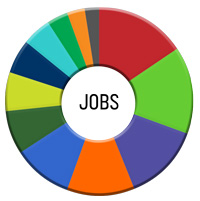
This month we conducted an industry survey on plans for hiring during the year. Included here is a summary of the results. We started by simply asking, “Do you plan to hire additional people this year?” More than half of the respondents answered yes while about a third said no—which we take as an optimistic sign that our industry plans to expand in 2017.
Copyright © I-Connect007 | IPC Publishing Group Inc. All rights reserved.
Log in